 Fırsatlar
 Favorilerim
 Kargo Takibi
 TOPTAN HEDİYELİK EŞYA
 TOPTAN MAGNET
 TOPTAN ŞEHİR TEMALI HEDİYELİK
 TOPTAN ÇİNİ ÜRÜNLER
 TOPTAN NAZAR KOLEKSİYONU
 TOPTAN BARDAK
 TOPTAN SERAMİK ÜRÜNLER
How to Design Custom Souvenirs for a City, Hotel, or Event
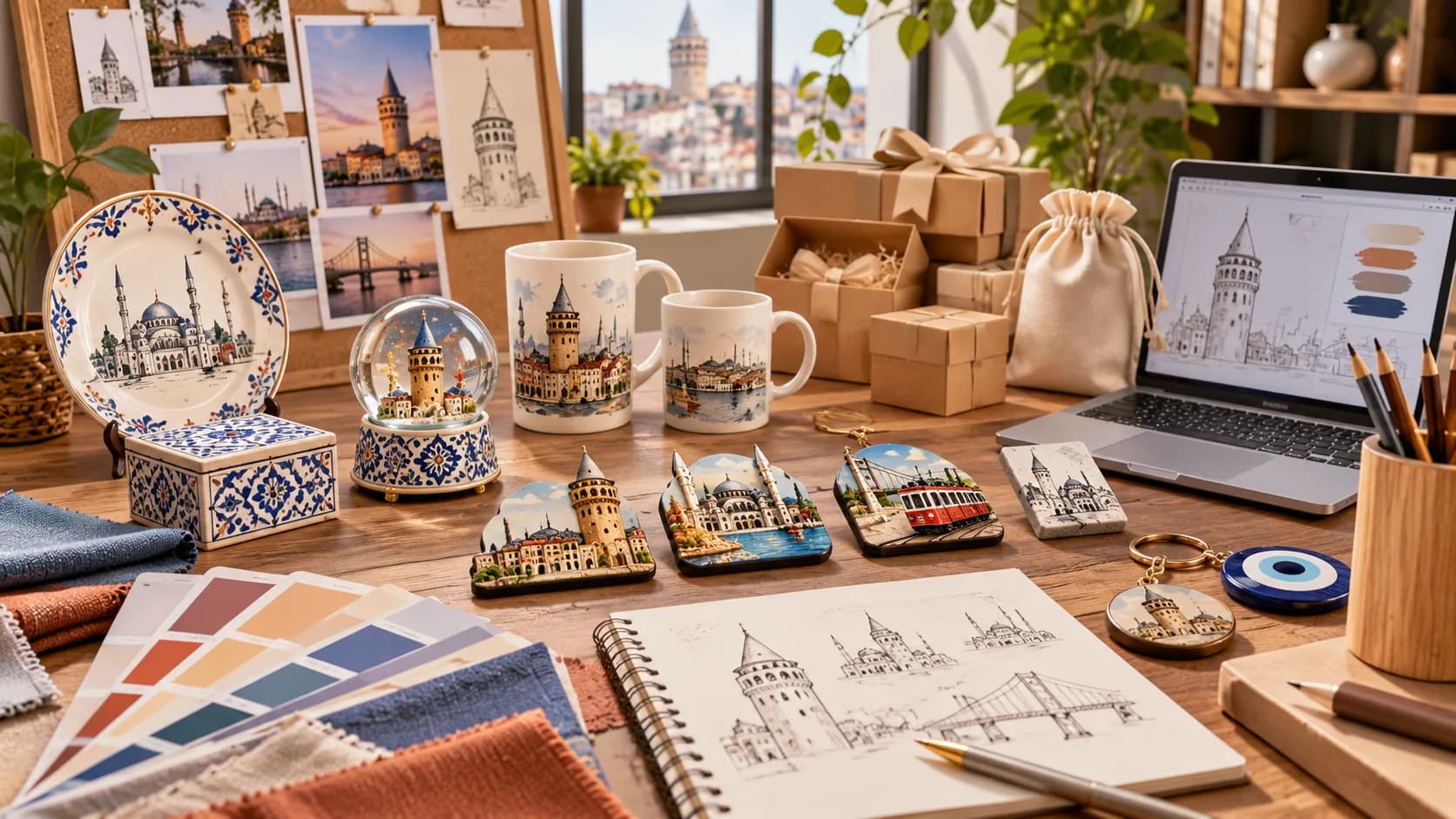
Custom souvenirs can turn a destination, occasion, or business identity into a tangible keepsake. But customization alone does not guarantee a good gift. The strongest products combine a clear visual story, an appropriate material, and details that remain appealing after the event or trip ends.
What Are Custom Souvenirs?
Custom souvenirs are gift products adapted to a particular place, organization, or occasion. This might involve a destination name on a magnet, an illustrated hotel facade on a mug, or an event motif on a keychain. Personalization methods vary across materials and suppliers.
Customized versus personalized
In retail language, customized souvenirs usually describe a design made for a group, location, or brand. Personalized souvenirs may refer to an item carrying an individual's name, message, or other unique detail. Suppliers do not always use these terms identically, so explain the required result in your brief.
Step 1: Define Who the Souvenir Is For
A museum visitor, hotel guest, conference attendee, and local resident may value different features. Ask what the item should help them remember and where they are likely to use or display it.
For example, a conference souvenir might prioritize easy packing and understated branding. A destination shop may prefer a clearly recognizable landmark or regional motif.
Step 2: Choose a Product Format
Custom fridge magnets suit compact, affordable destination collections. Printed mugs and ceramic cups can support daily use. Keychains and bottle openers fit practical gifting, while decorative ceramics can suit a more display-oriented audience.
Match the design to the material
Fine photographic detail may reproduce differently on epoxy, ceramic, wood, or metal. Avoid designing only for a large computer screen; assess whether the design remains legible at the actual product dimensions.
Step 3: Create a Clear Artwork Brief
A good brief should state the product type, desired dimensions, destination or event name, color palette, logo or illustration files, approximate quantities, packaging expectations, and target delivery date.
Check permissions and consistency
Confirm the rights to logos, illustrations, museum collection images, and other protected artwork. For brand projects, use consistent logos and typography across formats. Do not rely on a low-resolution screenshot when an approved print file is available.
Step 4: Review Proofs and Samples
Digital mockups help teams agree on layout, but they do not always show texture, print finish, material weight, or real-world color accurately. When available and appropriate, request a physical sample before committing to a substantial order.
Check design centering, spelling, image sharpness, protective coating, and packaging. Small text can be especially difficult to read on compact souvenir products.
Step 5: Plan Quantities and Reorders
Consider expected visitors or attendees, sales channels, event dates, and inventory storage. A limited run may reduce leftover stock, but production economics vary. Ask the supplier for current minimum order quantities, production schedules, sample options, and repeat-order requirements.
What Are Common Mistakes in Custom Souvenir Design?
Overloading the surface with text, using a generic graphic without local relevance, overlooking the production material, and skipping proof approval are common risks. Another mistake is selecting a product only because it is inexpensive without considering its use or appeal.
How Can Businesses Create a Coordinated Collection?
Use one visual identity across several formats while adapting the artwork to each item. A landmark illustration might appear as a simple silhouette on a magnet and as a more detailed composition on a ceramic cup. This produces a coherent collection without forcing every product to look identical.
Myros lists customizable categories including souvenir magnets, printed mugs, Turkish coffee cup sets, and other gift items. Availability, specifications, and production terms should be confirmed for the chosen product.
Frequently Asked Questions
What products can be customized as souvenirs?
Common formats include fridge magnets, mugs, coffee cups, keychains, and decorative gifts. The exact options depend on the supplier.
How do I choose between a logo and a destination illustration?
Choose the visual that best matches the recipient's reason for keeping the item. Sometimes a subtle logo paired with a distinctive location image works better than a logo alone.
Do custom souvenirs require a minimum order?
Requirements vary by product and supplier. Confirm the current quantity and production terms before purchasing.
Why are samples important?
Samples help verify finish, color, legibility, material quality, and overall presentation beyond a digital mockup.
Final Thoughts
Effective custom gift production starts with audience insight and ends with careful quality checks. Begin with one clear story, select practical formats, approve artwork thoughtfully, and compare Myros customization options for your intended project.