 Deals
 My Favorites
 Track Order

 WHOLESALE GIFTS
 FRIDGE MAGNETS
 CITY THEMES
 ALL TILE PRODUCTS
 EVIL EYE COLLECTION
 MUGS & GLASSES
 WHOLESALE CERAMIC PRODUCTS
Wood, Ceramic, or Epoxy Fridge Magnets: Which Should Souvenir Shops Stock?
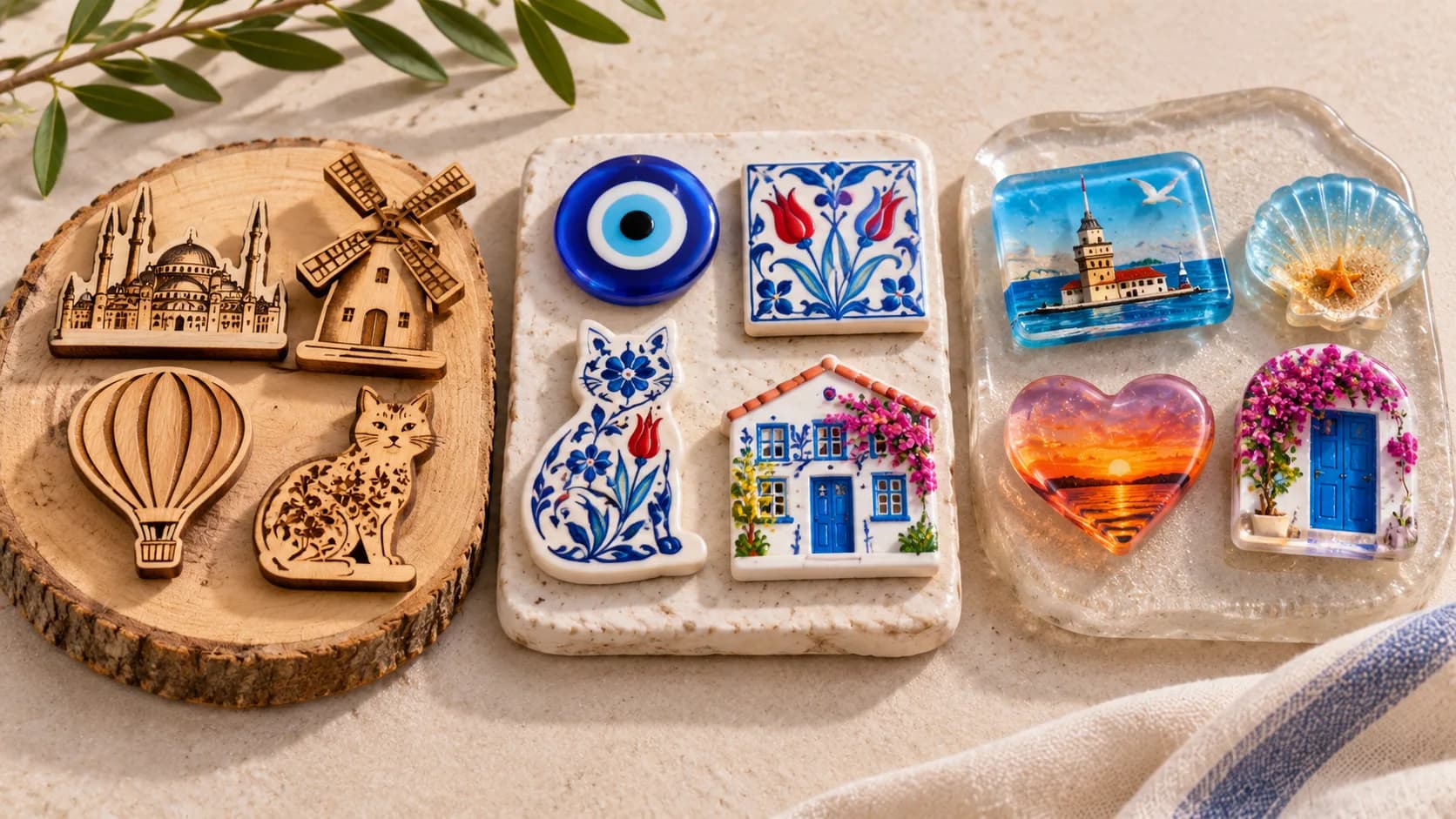
Wholesale fridge magnets are a familiar souvenir category because they are compact, recognizable, and easy to collect. But the material matters. Wooden, ceramic, and epoxy magnets do not look or feel the same, and each can support a different retail story. Choosing a combination is often more useful than treating one format as universally best.
What Is the Difference Between Wooden, Ceramic, and Epoxy Magnets?
A wooden magnet typically uses a wood-based body or decorative face. A ceramic magnet features a ceramic element, which can carry painted or printed imagery. Epoxy dome magnets usually protect a graphic beneath a clear resin-like finish. Exact construction varies by product, so check individual specifications.
Wooden fridge magnets
Wooden souvenir magnets can work well for illustrated skylines, nature themes, simplified maps, and designs where a tactile look matters. Check edge finishing, printing quality, and magnet attachment.
Ceramic fridge magnets
Ceramic souvenir magnets may suit traditional patterns, architectural motifs, and more decorative gift collections. Ceramic elements can be more vulnerable to impact than flexible materials, so handling and packaging require care.
Epoxy fridge magnets
Epoxy fridge magnets often emphasize bright printed artwork behind a glossy surface. They may be useful for colorful city photography, maps, and graphic-heavy destination designs. Assess print sharpness and the quality of the protective surface.
Which Magnet Material Is Best for a Souvenir Shop?
There is no single winner. Match material to your audience, theme, and intended retail price range.
Wooden: Natural or graphic visual character; check finish and design detail.
Ceramic: Decorative and traditional visual character; consider fragility and packing.
Epoxy dome: Glossy and image-focused visual character; check print quality and surface finish.
A shop selling heritage designs may prefer ceramics, while a modern destination store may prioritize graphic wood and epoxy formats. The right mix can include all three.
How Can You Build a City-Themed Magnet Collection?
Begin with a small set of recognizable motifs: a landmark, a skyline, a local symbol, and a place name. Keep colors and typography consistent enough to look like one collection while allowing each design to stand alone.
Use a design hierarchy
A city name should remain easy to read at the product's actual size. Avoid overcrowding a small surface with too many landmarks or captions. Consider a clear silhouette or single recognizable detail.
Include several buying motivations
Some travelers collect one magnet per destination; others buy several for friends. Offer a range of styles so both groups can find something relevant without duplicating nearly identical designs.
What Should Buyers Check Before Ordering Magnets in Bulk?
Review dimensions, material, printing method, finish, attachment quality, minimum order quantities, packaging, lead time, and available artwork approvals. Request a sample when evaluating a new material or custom design.
For fragile materials, check how units are separated and protected in cartons. For printed magnets, confirm that the proof matches the production file and final color expectations.
How Should Fridge Magnets Be Displayed?
A magnet wall or compact rack can make designs easy to compare. Group products by city or motif, keep price labels visible, and ensure the display surface is appropriate for the products' magnetic strength.
Product photography also matters online. Show the full front design, a close-up of material texture, and a size reference if possible. These details help buyers understand differences without relying on vague descriptions.
Where Can Retailers Find Different Magnet Styles?
Myros lists wooden, ceramic, epoxy, polyester, metal, and other magnet formats within its wholesale magnet categories. Businesses can compare styles and confirm available personalization options against their location and audience.
Frequently Asked Questions
Are ceramic magnets better than wooden magnets?
Not inherently. Ceramic can create a decorative finish, while wood may offer a different tactile and visual style. Retail suitability depends on design, price, and handling needs.
What is an epoxy dome magnet?
It generally features a printed design covered by a clear, raised protective dome. Construction and quality vary by supplier.
What should I ask a wholesale magnet supplier?
Ask about material, actual dimensions, artwork specifications, packaging, minimum quantities, samples, and replenishment timelines.
Can city-themed magnets be customized?
Often, yes, subject to the supplier's production options and artwork requirements.
Final Thoughts
The best bulk souvenir magnet assortment balances appearance, price, durability, and destination storytelling. Test multiple formats, compare sell-through, and choose the designs visitors actually respond to.